Guide contents
How answers are produced
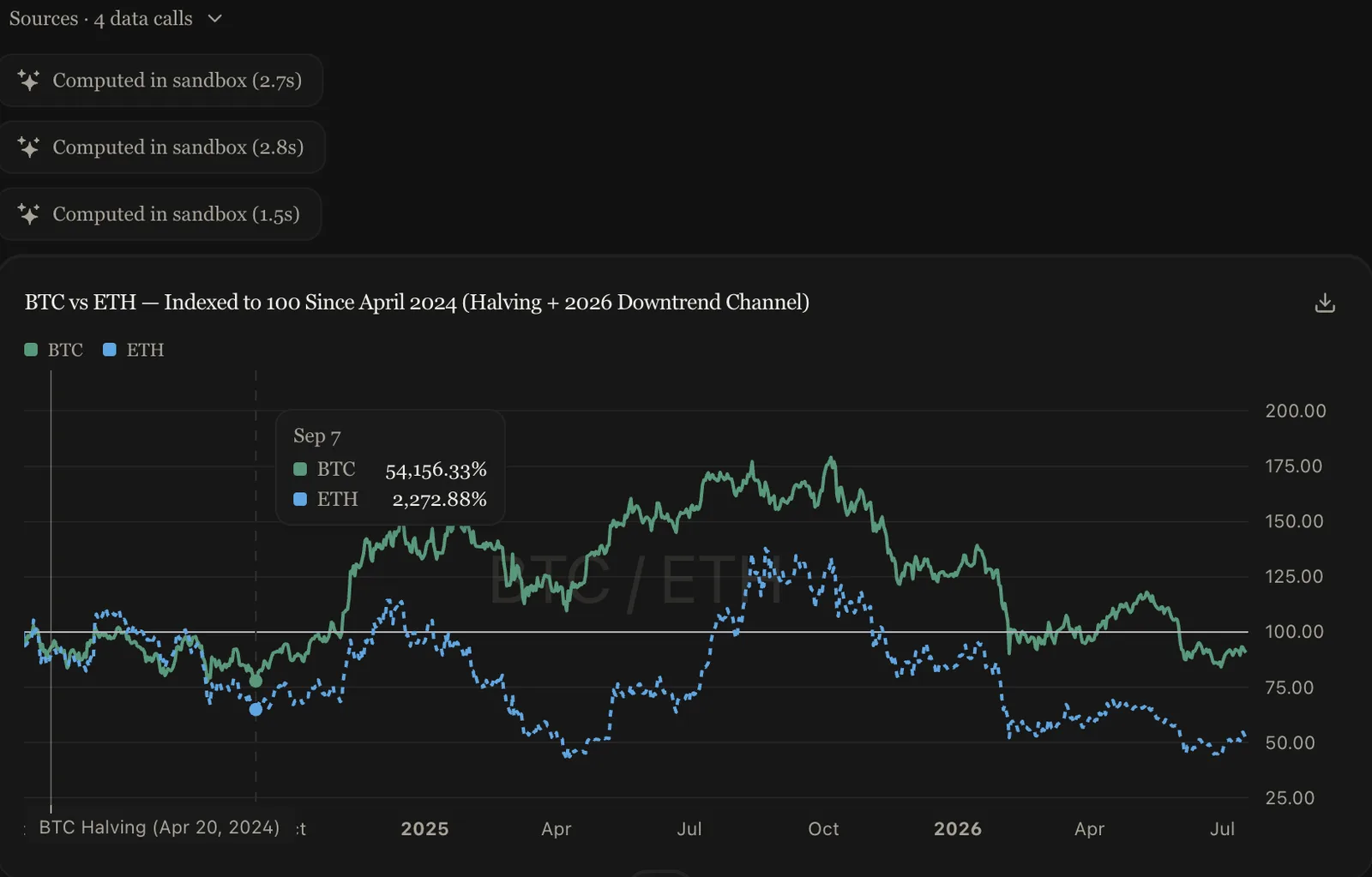
Every substantive answer runs the same pipeline. Knowing it tells you what to trust, what to check, and how to ask better questions.
1. Your question becomes data calls
The analyst fetches what it needs from live financial datasets: quotes, statements, filings, estimates, transcripts, macro series. Each call is listed in the Sources panel with the answer — expand it to see exactly what was requested. Specific numbers, dates, and quotes come from these calls, made during your session. Not from the model’s memory.
2. Calculations run as real code
Statistics — regressions, correlations, simulations — run in an isolated sandbox with no network access. Data is staged in from the session’s fetches, the code runs, and the printed result comes back verbatim. You see these as “Computed in sandbox” entries. See Calculations.
3. Charts are drawn from fetched series
Price history and indicators are fetched and computed server-side, then rendered as an interactive chart. The analyst chooses what to plot — it never types the data points. See Charts.
4. The answer shows its work
The written answer cites what was fetched, with as-of times where they matter. The Sources panel, sandbox results, and charts sit alongside it. When the data doesn’t support a claim, the analyst is instructed to say so — not to fill the gap.
What this does not mean
Sourced is not infallible. Quantesta runs on experimental AI and third-party data and can be wrong — inaccurate, incomplete, or out of date. Treat it as a fast, sourced starting point, not the final word. See Does Quantesta make up numbers?